South Africa: Day 5

Posted: November 14, 2026

After an informative and eye opening day in Johannesburg on Friday, we awoke bright and early on Saturday morning to depart for Cape Town. Following a two and a half hour flight, we landed at Cape Town International Airport around 1:00 pm, collected our luggage, met our driver, and were on our way to the city.


Shortly after starting on our journey, we encountered a vast "informal development" (essentially a shanty town) built along the side of the highway—a reminder that, despite the end of apartheid and the transition to democracy, extreme poverty remains a grim reality for many people in South Africa.


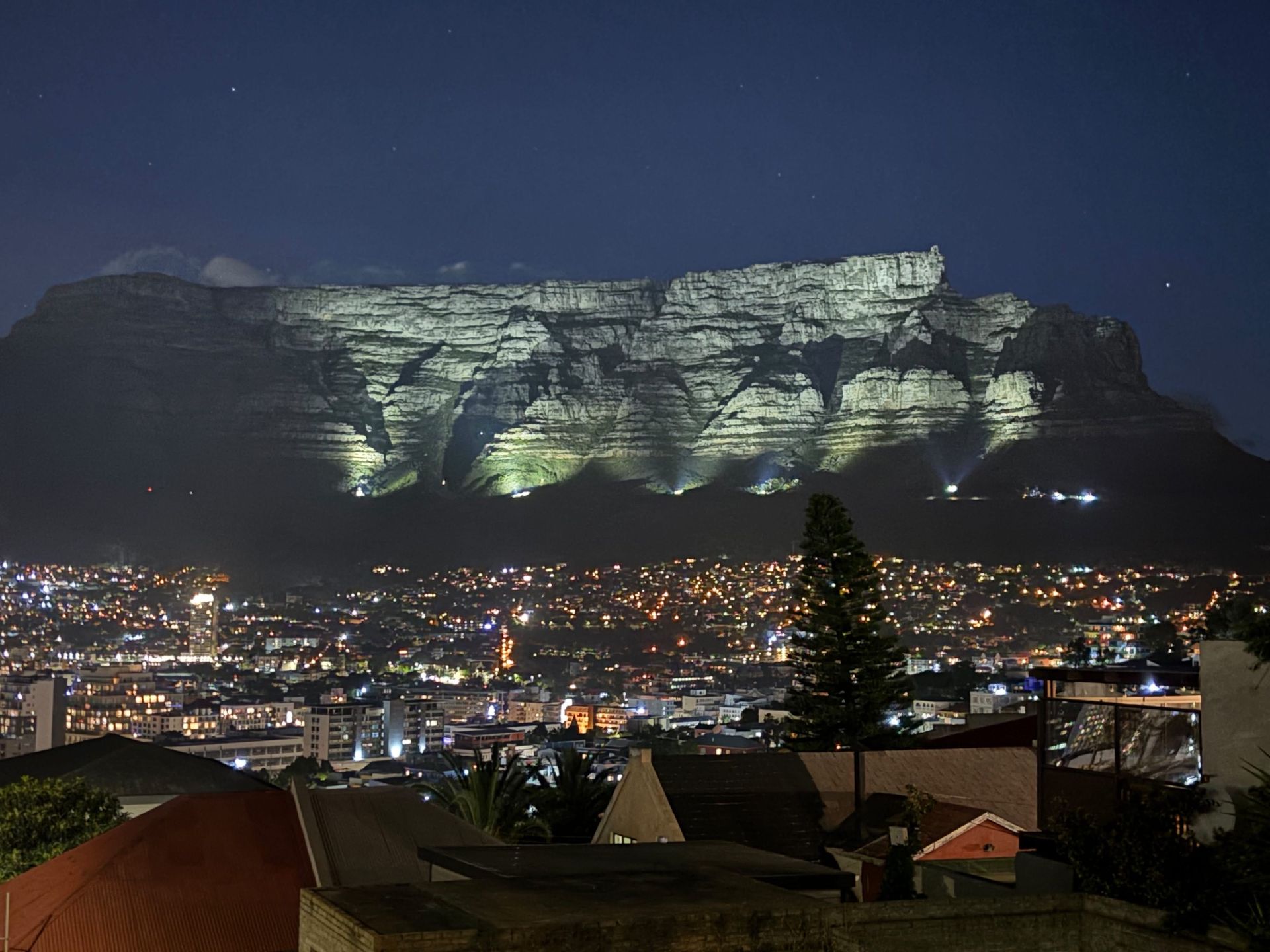
As we drew closer to the city, we encountered some of the natural beauty for which Cape Town is famous, including iconic Table Mountain and Cape Town Harbor. We also passed Groote Schuur Hospital, where the world's first heart transplant was performed, and University of Cape Town, one of Africa's top universities.


After checking into our hotel, we traveled to Bo-Kaap, Cape Town's oldest surviving residential neighborhood, located on the slopes of Signal Hill. Known for its pastel houses and narrow cobblestone streets, Bo-Kaap is the center of Muslim and Cape Malay culture in Cape Town.


Bo-Kaap was founded during the late 1700s to provide housing for enslaved people and laborers brought to the Cape from Malaysia, Indonesia, India ,and other locales by the Dutch East India Company. Others lived in extremely harsh conditions in the Slave Lodge, also owned by the Dutch East India Company. These slaves and laborers played a substantial role in the development of Cape Town. Many of today's residents of Bo-Kaap are descended from these early residents, and now live in homes that they own themselves.


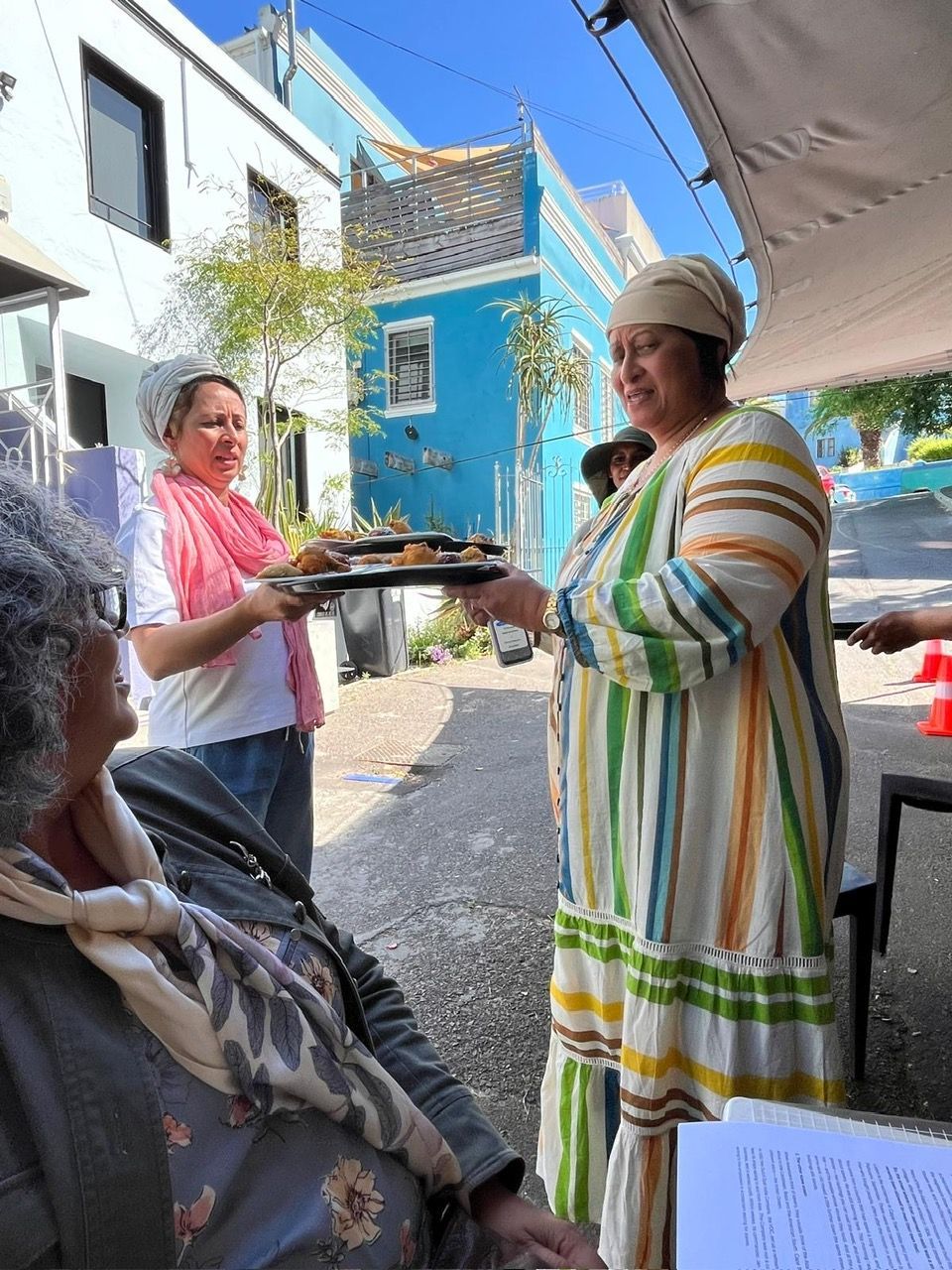
One of these descendants is Faeeza Abrahams, who, along with her children, runs Faeeza's Home Kitchen, a renowned cooking school and Cape Malay restaurant. Following in the footsteps of celebrities such as Harry and Meghan, we enjoyed a snack of Samosas and Chili Bites (both savory snacks) and Koeksisters (a donut-like sweet). 


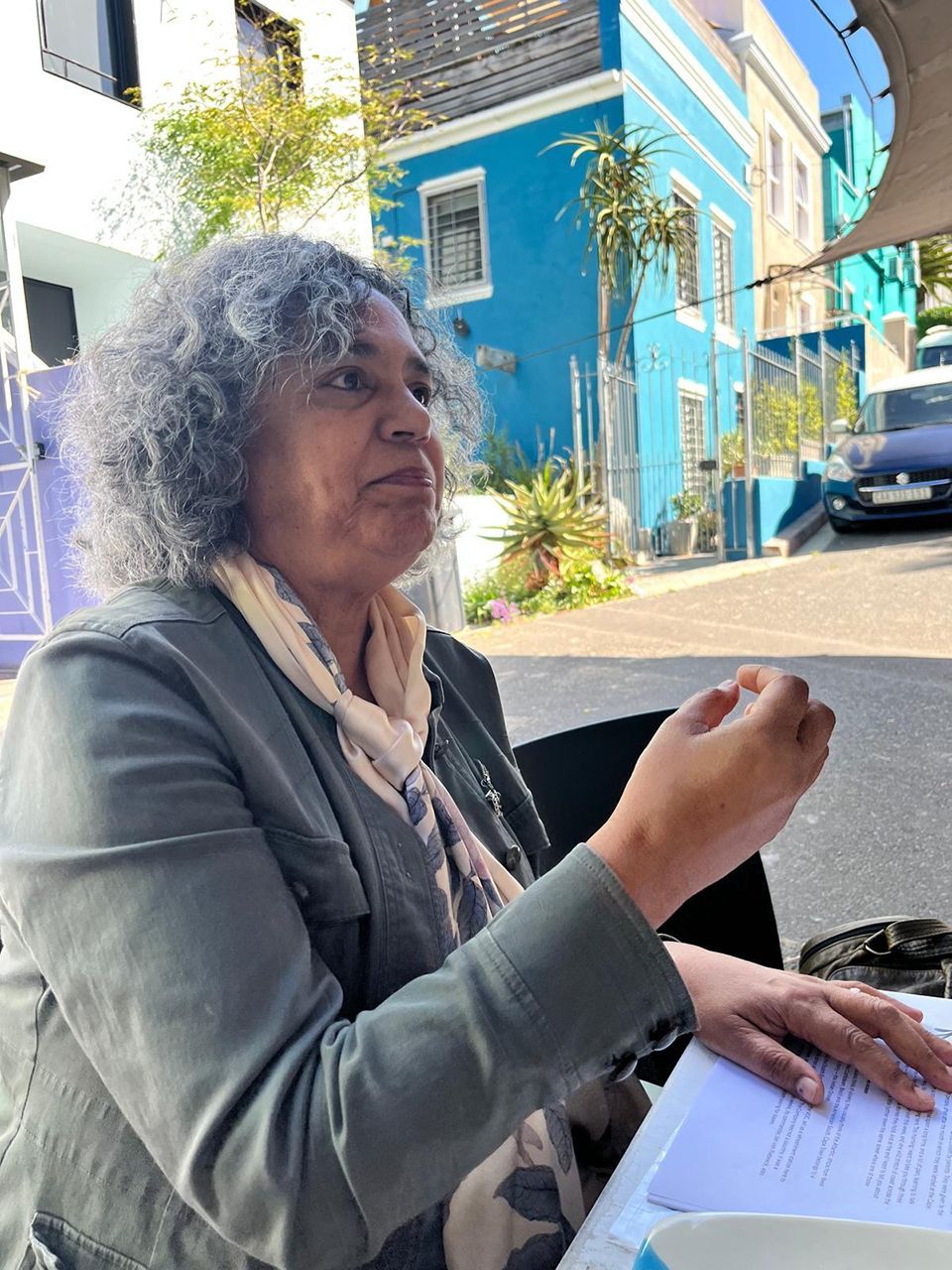
As we were enjoying our snack we were joined by activist and poet Zenariah Barends, who described in detail the history of slavery, segregation and apartheid in Cape Town and South Africa. Zenariah noted that while slavery was abolished by the British in 1834, abolition was followed, in the early 1900s, by a long period of forced segregation of black residents in townships such as Soweto and, beginning in 1948, Apartheid. When Apartheid officially ended in April, 1994, the South African government instituted the Truth and Reconciliation Commission (TRC), led by Archbishop Desmond Tutu.


The goal of the TRC was to provide a forum for the victims of atrocities committed during Apartheid to confront the perpetrators and for the perpetrators to take responsibility for their crimes, ideally leading to reparations for the victims and forgiveness for perpetrators who confessed. Zenariah served as the head of investigations for the TRC in the Western Cape. Describing the outcome of the TRC proceedings, Zenariah stated that the work of the TRC was incomplete, in that most victims did not receive reparations.


Similarly, many perpetrators did not accept responsibility for their actions yet were never prosecuted. Zenariah firmly believes that the TRC did the best it could with the time and resources available to it. She stated that it is essential to say out loud what was done for the process of forgiveness and reconciliation to begin. To end our time together, Zenariah read to us a recent poem, Board of Pieces, pointing, in part, to atrocities committed against children in Iran and the United States.   


After an emotional time with Zenariah, we were ready to relax for a few minutes with a walk through the Bo-Kaap neighborhood and adjacent areas. Shortly afterward we headed back up Signal Hill for dinner at another neighborhood restaurant, Bo-Kaap Kombuis, where we sampled Cape Malay dishes such as Boboti, Butter Chicken and Seafood Paella, followed by a pastry-and-ice-cream dessert. We were entertained during dinner by a duo of singers, who quickly identified us as Americans. After an enthusiastic chorus of Happy Birthday for Gini Barazia, our host encouraged us to join him in singing "Take Me Home, Country Roads" and "Sweet Caroline." We happily obliged. We left dinner with full stomachs and smiles on our faces, slightly nostalgic for home.


– Scott Stewart 

Continue Exploring Holy Comforter

By Elys McLean • June 29, 2026
We had a wonderful and meaningful mission trip. It really left an impression on the participants—youth and adults. It opened our eyes and hearts to how important it is to serve others and we realize we probably gained more from our experience and growth than those we served.
By Elys McLean • June 28, 2026
Today we woke up to no water. We couldn’t shower or wash. It’s a stark reminder of what many people in Puerto Rico and in other parts of the world are experiencing where there’s not enough water. Although Puerto Rico seems lush, they’re experiencing a drought and many of the water pipes are so old that they’ve broken. The National Guard has had to come and hand out water to many people here. It makes us realize how much we take fresh water for granted back home. At breakfast we saw Brother Gabriel, a Capuchin monk and our host at the Centro Capuchino. Then we loaded our bags into the vans and headed to San Juan to the Episcopal Cathedral. After attending the 8 a.m. English service, we joined the church community for coffee hour and they taught Father Jon how to make ginger brew—something he looks forward to drinking every time we come to this church. It was meaningful for us to celebrate Eucharist with Episcopalians from other countries. Many of them who attend the English-speaking service are from the West Indies. There used to be 2 English language services at the Cathedral, in addition to the Spanish one. But after Hurricane Maria, so many people left the island that the English-speaking congregation has dwindled and they only have 1 service. It’s shocking how Puerto Rico is still feeling the effects of Hurricane Maria, not just in infrastructure but demographically too. Many of the younger people have left the island and most of the people we help during our service projects are alone and without family here.  After church we went back into Old San Juan for a few hours before our flight home.
By Elys McLean • June 27, 2026
Today we went to Toro Verde, a zip lining course in the jungle. After finishing the course of 7 zip lines we then rode “The Monster”—the longest zip line in the Americas. It’s 2.5 km long (about 28 football fields long) and almost 1250 feet high. You ride in a horizontal position so it feels like you’re flying. The ride takes 2 minutes and you can reach up to 95 mph. Although the thought of going was scary and I was very tempted not to, I’m glad I did. The scenery was stunning and I felt so close to nature, like a bird as I soared over rivers and the jungle below. A good reminder that if we let our fears overtake us and we don’t step out of our comfort zone and take a chance, we can miss out on some of the most beautiful experiences of our lives. After zip lining we went into Old San Juan. We meet Brother Willy, an Episcopal Franciscan, at his church in Old San Juan. It’s beautiful and we enjoyed talking with him about the congregation and how they reach out to sailors—offering services in English every second Tuesday when many ships come into San Juan. After walking around Old San Juan for a bit we had a traditional Puerto Rican dinner of Mufungo and fish at Barrachina, the restaurant that invented the pina colada. We had non-alcoholic pina coladas too—delicious. We finished the day back at the Centro Capuchino with Compline outside.
Show More